


IP Cameras vs. Analog Cameras: Which Is Better for Your Home Security?
When it comes to protecting your home or business in Charleston, Huntington, or Hurricane, WV, choosing the right type of camera is essential. IP (Internet Protocol) cameras and analog cameras each have their strengths—but which one is right for your security needs?
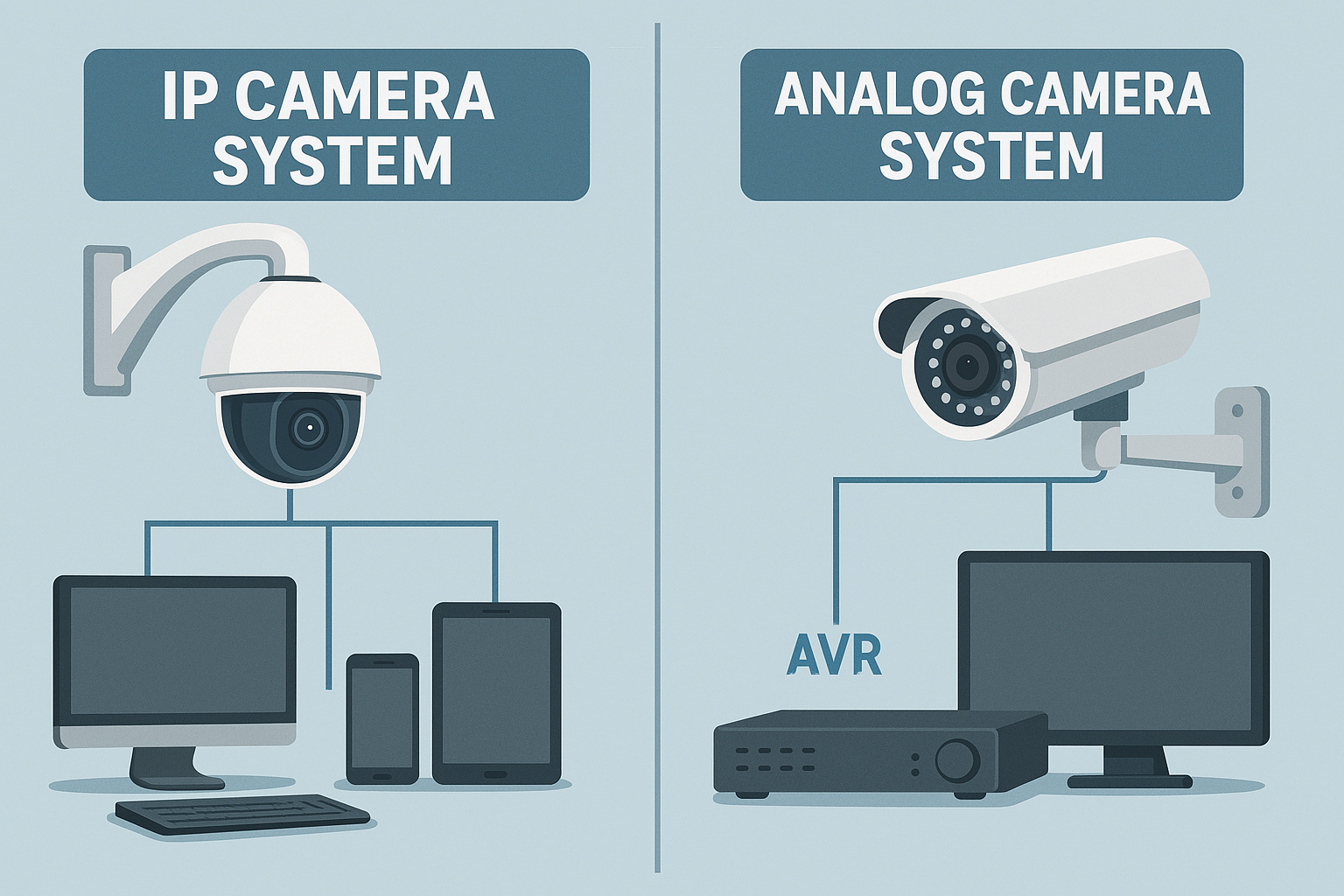
1. Video Quality and Resolution
IP cameras offer higher resolution—often 1080p or 4K—providing clearer images and the ability to zoom in on important details. Analog cameras, while improving, typically max out at lower resolutions, which can make identifying intruders harder.
2. Installation and Wiring
Analog cameras usually require a DVR and dedicated coaxial cabling. IP cameras, on the other hand, use Ethernet cables and can often be powered through PoE (Power over Ethernet), reducing the amount of wiring and making installation more flexible.
3. Remote Access and Smart Features
IP cameras connect directly to your home network and can offer smart features like motion detection, notifications, cloud storage, and mobile access. Analog systems often require more hardware to achieve similar results.
4. Cost Considerations
Analog systems are generally more affordable upfront, which makes them attractive for smaller budgets. However, as IP technology has become more common, the cost difference is narrowing—especially when factoring in long-term flexibility and remote access.
5. Scalability and Future-Proofing
IP systems are easier to expand. Need to add more cameras later? IP systems often allow for plug-and-play expansion, while analog setups may require a larger DVR and more cabling.
Which Is Best for You?
For most modern homes and businesses in WV, IP cameras provide better performance, future-proofing, and convenience. However, analog cameras may still be ideal for those looking to cover basic needs at a lower cost.
Not sure what system is right for your property? Contact CC Technologies today at about@cctechnologieswv.com or call 304-543-3822. We’ll help you evaluate your needs and install the right solution in Charleston, Hurricane, or Huntington, WV.